Nakamise Shopping Street and Asakusa Street Food Guide
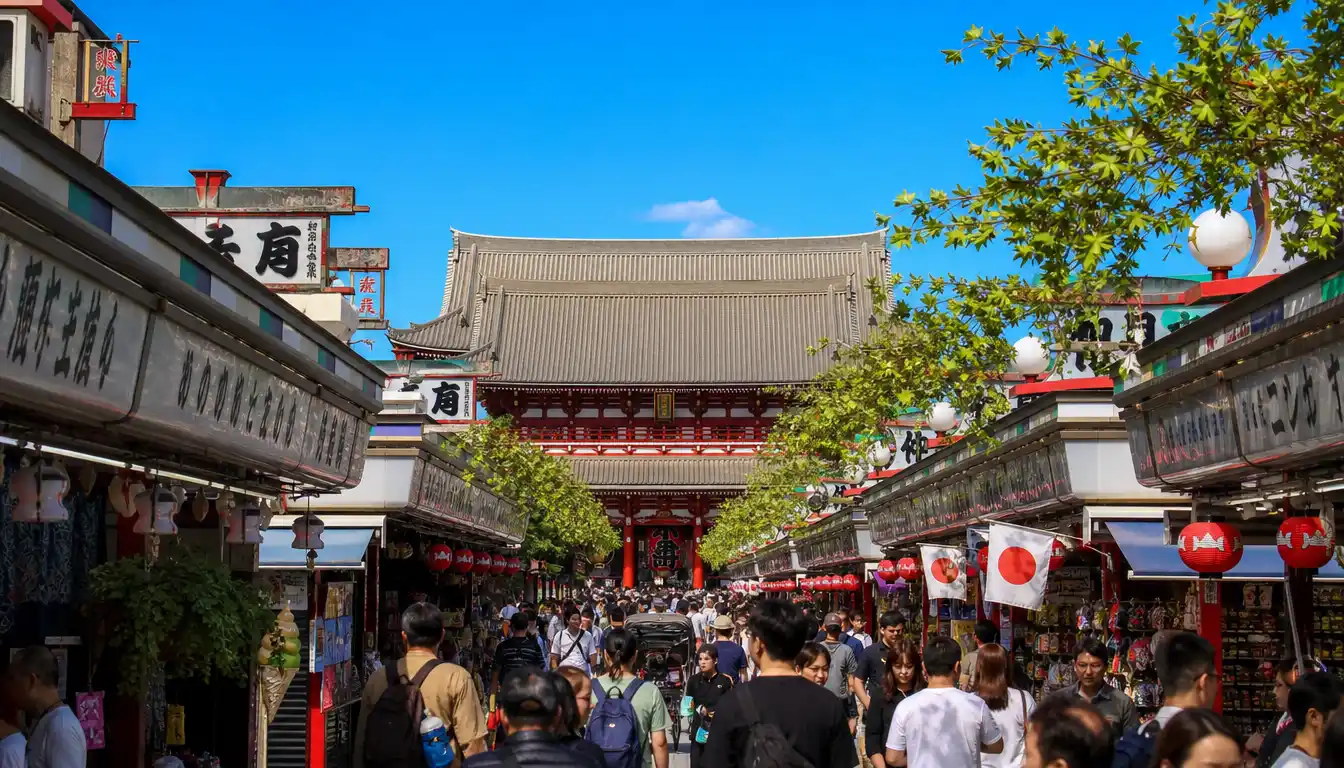
The smell hits you first. It is sweet red beans scorched against cast iron, mixed with sesame oil and the warm, salty glaze of toasted soy sauce crackers. If you walk through the giant red lantern hanging under Kaminarimon Gate, you step straight onto nakamise street asakusa, a 250-meter stone path of compact storefronts running directly toward the main hall of Sensoji. Most travelers expect an artificial tourist trap. It gets crowded, certainly. By 11:30 in the morning, thousands of visitors squeeze between the green-tiled eaves, jostling alongside high schoolers on school trips and couples wearing rented kimonos.
Yet behind the tourist novelty, this narrow corridor carries centuries of neighborhood history. Neighborhood merchants have operated these small stalls since the late 1600s, passing leases through generations of local families. Nakamise remains one of the best spots in Tokyo to sample classic confections that have barely changed since the samurai era. If you know what to order, when to visit, and how to respect the street rules, eating your way down this lane is one of the most rewarding culinary strolls in the city.
Book your sensoji temple tokyo experience:
The Reality of Walking Nakamise Street Asakusa
The layout is simple. You walk roughly 250 meters from Kaminarimon to the inner Hozomon Gate, flanked by 89 individual shops. About 54 stalls line the eastern side, with another 35 on the west. Each stall occupies only a few square meters, often run by an elderly shopkeeper or a small family team working with rhythmic efficiency.
The street was originally established around 1685. Temple authorities granted neighbors who cleaned the grounds permission to open stalls selling tea, river fish, and novelty goods to pilgrims. Earthquakes and fires destroyed the wooden structures repeatedly over the centuries. The current concrete structures date back to the post-war reconstruction of the late 1940s, designed to evoke traditional Edo aesthetics with green tiled roofs and festive paper lanterns.
In the evening, after the stall shutters come down around 7:00 PM, the atmosphere shifts completely. Beautiful murals painted on the metal security shutters illustrate traditional seasonal festivals and historic neighborhood scenes. It becomes quiet and lonely, offering a dramatic contrast to the midday chaos.
Note: Public trash cans do not exist along the street. If you wander away with a greasy paper wrapper or skewer, you will likely carry it in your pocket or backpack for hours.
The Essential Asakusa Street Food and Where to Find It
Food is the true reason to slow your pace on this avenue. While you will spot plenty of generic souvenirs, the real treasures are the freshly made snacks handed across the counter in paper sleeves. You want things hot from the griddle or dusted fresh in fragrant flour.
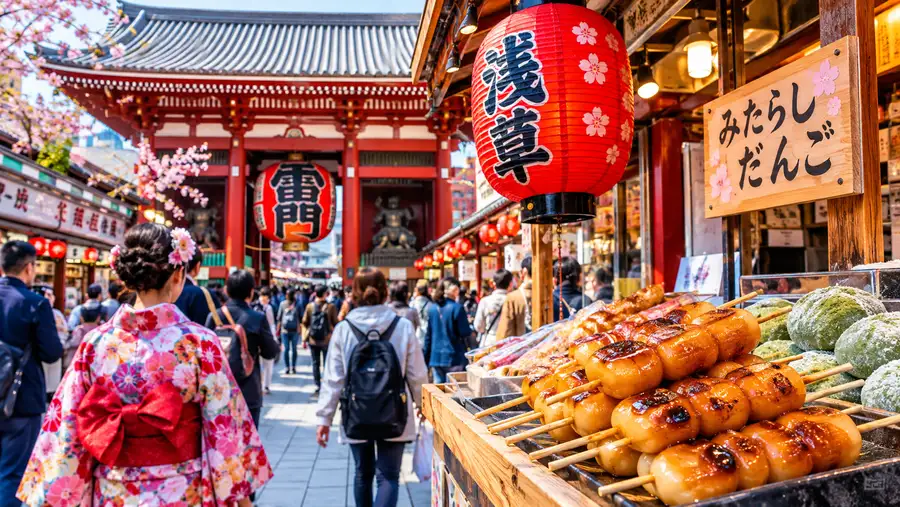
Begin with ningyo-yaki, small sponge cakes molded into shapes representing local symbols: the five-story pagoda, giant lanterns, and pigeons. Kimuraya Ningyoyaki Main Store has produced these treats on the corner near the inner gate since 1868. The batter is subtly sweet, poured into heavy iron molds and stuffed with smooth red bean paste. Watching the bakers flip the cast-iron plates with bare hands is mesmerizing.
A few stalls down, Asakusa Kokonoe draws continuous crowds for age-manju. These are fried buns filled with sweet pastes, coated in a crisp tempura batter. The texture is crunchy outside and pillowy within. You can choose classic red bean, but the black sesame, sweet potato, and matcha varieties are just as good. They cost around 130 to 250 yen per piece, depending on the filling.
Further along the central stretch, Azuma serves warm kibi dango based on an Edo-period recipe. These are small millet-and-rice dumplings skewered on bamboo sticks and covered in roasted soybean flour (kinako). They sell them in paper envelopes of five small skewers for roughly 400 yen, accompanied by cold cups of sweet, milky amazake in summer or warm tea in winter.
Pro tip: Do not walk while eating in Asakusa. Japanese street etiquette forbids aruki-kui (eating while walking); shopkeepers expect you to stand in their designated space beside the stall until you finish, then return the trash directly to them.
| Snack | Recommended Shop | Approximate Price | Flavor Profile |
|---|---|---|---|
| Ningyo-yaki | Kimuraya | 500 yen (bag of 4) | Warm sponge cake, sweet red bean paste |
| Age-manju | Asakusa Kokonoe | 150 to 250 yen each | Crisp fried exterior, rich sesame or sweet potato |
| Kibi Dango | Azuma | 400 yen (5 skewers) | Chewy millet rice, nutty roasted soy powder |
| Jumbo Melonpan | Asakusa Kagetsudo | 300 yen each | Crispy sugar-cookie crust, fluffy brioche interior |
| Menchi-katsu | Asakusa Menchi | 350 yen each | Savory deep-fried minced beef, sweet onion juice |
A short detour down the side lanes opens up even more things to do in Asakusa, especially if you head around the corner to Asakusa Kagetsudo. Their jumbo melonpan rests for three hours during fermentation, producing a bread that puffs up the size of a catcher's mitt. The cookie crust is paper-thin and shattering, while the inside remains light as air. Nearby, Asakusa Menchi sells deep-fried breaded patties made from minced pork and local beef, yielding hot onion-scented broth with every bite.
Sensoji Temple Tokyo Near Breakfast Places and Morning Routines
If you arrive early to beat the tour groups, Nakamise stalls will still be shuttered. Most food vendors open between 9:30 AM and 10:00 AM, whereas the temple grounds remain open around the clock. Finding Sensoji Temple hours and admission details is easy since the outer grounds never close and cost nothing to enter. Early morning between 6:30 AM and 8:30 AM is magical, but you need breakfast before the street food griddles fire up.
Fortunately, several exceptional breakfast places sit within a five-minute walk of the temple gates. Asakusa retains a vibrant kissaten (retro coffee shop) culture that excels at morning sets. Royal Coffee Shop, tucked into an alley just west of Nakamise, opens around 8:00 AM. Inside, classical music plays beneath stained glass windows, and servers in vests deliver thick wedges of buttered toast, boiled eggs, and siphon-brewed coffee served in heavy ceramic mugs.
For something traditional, Misojyu specializes in artisan miso soup and opens at 8:00 AM. It sits about 200 meters northwest of Kaminarimon. Their morning sets include large bowls filled with slow-cooked pork belly, giant daikon radishes, and seasonal greens, served with handmade onigiri sprinkled with sesame and salt. Eating savory soup on a chilly morning sets up your stomach perfectly for a second round of sweet snacks on Nakamise an hour later.
Feb's Coffee & Scone is another favorite, opening at 8:30 AM just past the northwest edge of the temple compound. They serve thick slabs of toasted bread from the famed Pelican Bakery down the street, topped with red bean paste and salted butter, alongside bitter espresso drinks.
Book your sensoji temple tokyo experience:
Street Etiquette and Practical Rules on Nakamise Street Asakusa
Enjoying the food along the asakusa nakamise shopping street requires adapting to local customs. Western tourists often purchase a snack and stroll casually down the center of the lane while chewing. In Asakusa, this is strictly discouraged. Signboards in English, Chinese, and Japanese warn visitors against eating on the move. Spilling bean paste on somebody's silk kimono or dropping sticky syrup on historic flagstones creates major friction between locals and visitors.
The proper method is simple: step to the designated eating zone beside the shop counter. Finish your food completely, hand your paper cup or bamboo skewer back to the staff, thank them with a quick gochisosama deshita, and then continue walking. This habit keeps the avenue spotless despite the absence of public waste bins.
- Payment preferences: carry cash; while many vendors now accept IC transit cards like Suica or Pasmo, coin transactions remain the standard for small snacks under 300 yen.
- Photography rules: never poke cameras inside the preparation area; ask permission before snapping close-up photos of elderly artisans at work.
- Souvenir selection: inspect packaging; authentic Edo craft items carry small labels indicating they were made in Tokyo rather than mass-produced overseas.
- Crowd navigation: keep to the left when walking, allowing pilgrims and faster foot traffic to pass through the center.
Pickpockets are exceptionally rare in Japan, but dropping your wallet while digging for coins in a packed crowd happens frequently. Keep your cards and cash secured in a zipped inner pocket rather than an open tote bag.
Wandering into Shin-Nakamise and the Historic Side Alleys
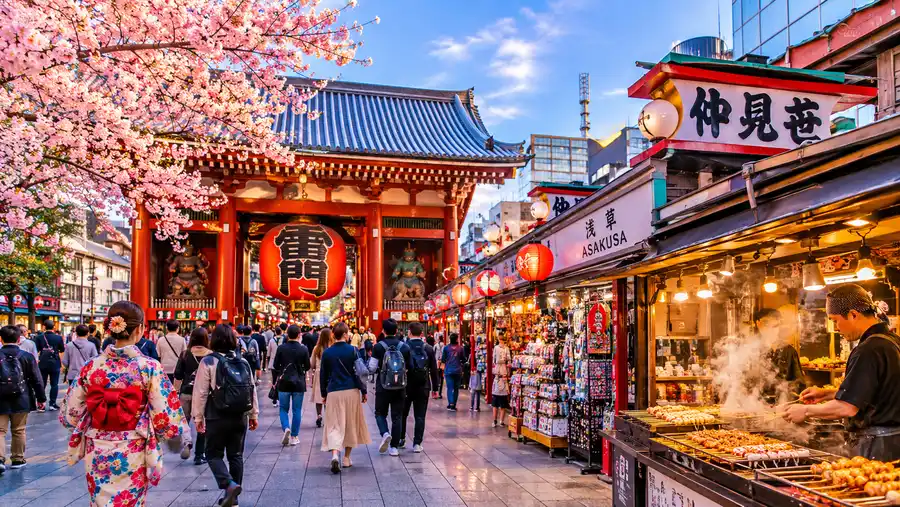
When the main street becomes so dense that you can barely move your elbows, step sideways into the cross streets. Shin-Nakamise runs perpendicular to the main route, covered by an arched glass roof that shields shoppers from rain. It feels less like an open-air pilgrimage path and more like a post-war shopping arcade.
Shin-Nakamise features roughly 100 establishments, including traditional clothing outlets, kitchen knife sharpeners, and small dessert shops specializing in roasted sweet potatoes and matcha gelato. It is also where many locals actually do their errands, buying socks, tea leaves, and everyday groceries.
Denboin Street (Denboin-dori) is another fantastic detour running parallel to Shin-Nakamise. The storefronts here were redesigned with Edo-period architectural details, complete with wooden sliding panels, copper lanterns, and even fiberglass statues of kabuki thieves like Nezumi Kozo perched on rooftops. It offers a much slower walking pace, lined with shops selling carved wooden combs, hand-hammered copper pans, and handmade leather goods.
- Denboin-dori: historic craft shops, artisan knife makers, and quiet garden walls.
- Hoppy Street: located just west of the temple, featuring open-front taverns serving beef tendon stew and cold draft beer on milk-crate tables.
- Nishi-Sando: a covered shopping gallery paved with polished cedar planks, boasting retro arcade games and goldfish scooping stalls.
You can easily spend two hours getting lost in this web of lanes. The transition from sacred temple grounds to drinking alleys and souvenir stalls happens over just a few strides, giving Asakusa a earthy, working-class pulse you will not find in Shinjuku or Shibuya.
Frequently Asked Questions about nakamise street asakusa
What are the opening and closing hours for shops on Nakamise Street?
Most souvenir and craft stores open around 9:00 AM or 10:00 AM and close between 6:00 PM and 7:00 PM. Food stalls typically begin serving by 9:30 AM and sell out of popular items by mid-afternoon.
Can you eat while walking down Nakamise Shopping Street?
No, eating while walking is considered rude and is officially prohibited along the street. You must eat your food immediately in front of the stall where you bought it, then return your wrappers to the vendor before moving on.
How do you get to Nakamise Street from the subway?
Take the Tokyo Metro Ginza Line, Toei Asakusa Line, or Tobu Skytree Line to Asakusa Station. Exit from Exit 1 or Exit 3, and Kaminarimon Gate is less than a two-minute walk straight ahead.
Quick Reference
- Length: 250 meters with 89 shops
- Nearest station: Asakusa Station (1-minute walk)
- Operating hours: roughly 9:30 AM to 6:30 PM
- Must-try snack: Ningyo-yaki doll cakes (around 500 yen)
Book your sensoji temple tokyo experience:
Before You Head Out
Asakusa feels like a town stitched together from fragments of old Tokyo that refused to vanish. Nakamise can test your patience when tour bus crowds block every stall, but showing up around 9:00 AM transforms the entire experience into something serene. Grab a warm paper pocket of red-bean cakes, drink your tea by the counter, and listen to the wooden shop shutters rattle open across the flagstones. It is one of the simplest pleasures the capital has to offer.
Read more about sensoji temple tokyo.