Sensoji Temple History, Facts and Architecture
Step through the red gates at dawn, and you catch the bitter scent of cedar incense mixing with cool morning air before the crowds arrive. This ground has carried footsteps for nearly fourteen centuries. Understanding sensoji temple tokyo history turns what could be a simple photo stop into an encounter with Tokyo's deepest roots, stretching long before neon high-rises or samurai fortresses dominated the plain.
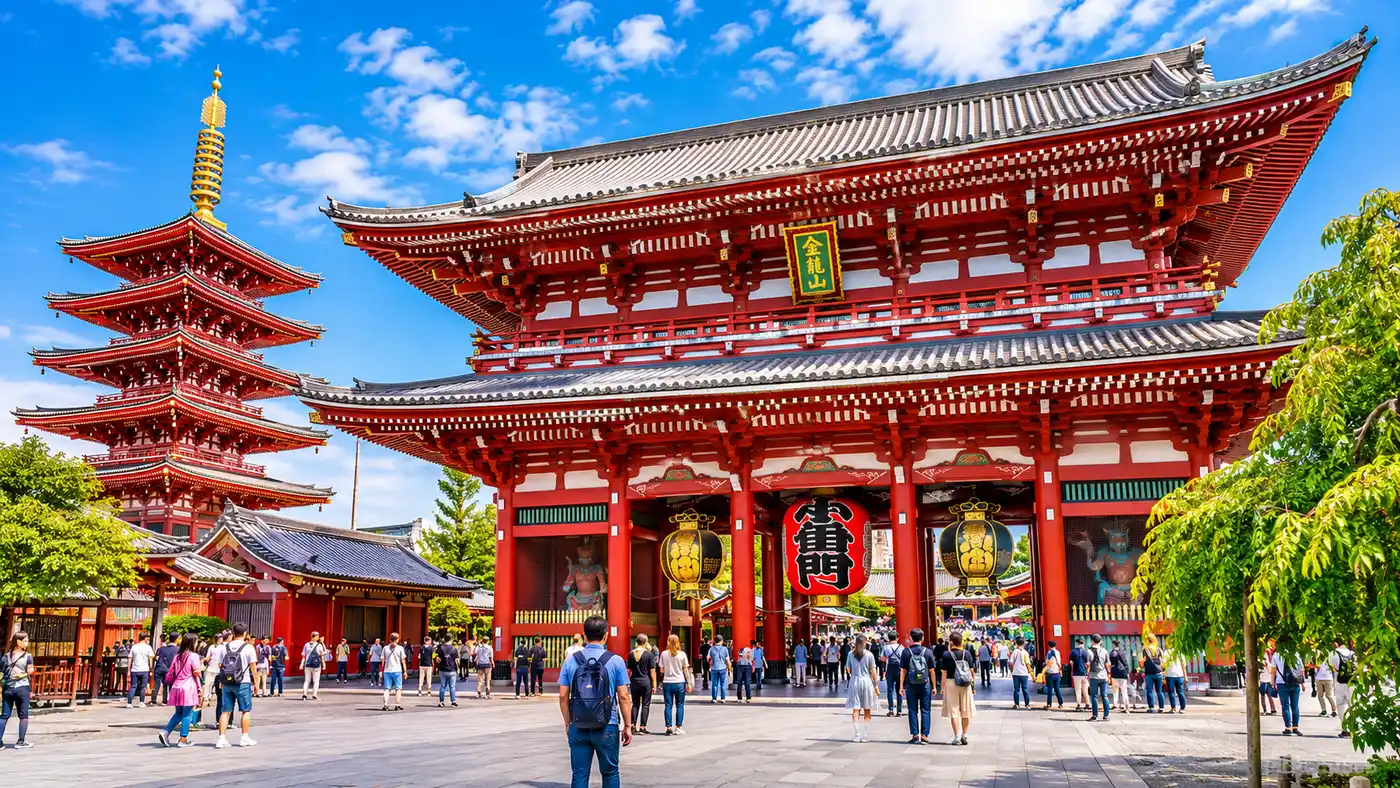
Most travelers know the temple by its iconic crimson lantern swinging above the entrance. Yet behind that famous paper silhouette lies an intricate tapestry of miraculous legends, devastating wartime destruction, quiet resilience, and Edo-era civic pride. Here is the full story of how a small fishing village shrine became the spiritual heartbeat of northern Tokyo.
Book your sensoji temple tokyo experience:
Origins and Legends: Is Sensoji the Oldest Temple in Tokyo?
Yes. When people ask if is sensoji the oldest temple in tokyo, the answer is undisputed. It was founded in the year 628, making it centuries older than the city of Tokyo itself. Back then, Tokyo did not exist; there was only a scattering of reed huts in a marshy river basin known as the Musashi Province.
The origin story sounds like folklore, but locals treat it as historical truth. On the morning of March 18 in the year 628, two fisherman brothers named Hinokuma Hamanari and Hinokuma Takenari cast their nets into the brackish waters of the Sumida River. Instead of hauling up sweetfish, their net tangled around a small golden statuette. Not knowing what it was, they tossed it back into the river and cast again. No matter where they rowed along the bank, the tiny figure reappeared in their nets.
Puzzled, the brothers carried the 5.5-centimeter figurine back to their village elder, a devout man named Haji no Matsuchi. He instantly recognized the golden relic as Bodhisattva Kannon, the Buddhist deity of infinite mercy. Inspired by the discovery, the village chief converted his own grass-roofed home into a makeshift chapel, dedicated the rest of his days to prayer, and enshrined the figure so neighboring villagers could pay respects. That modest hut marks the exact birthplace of Sensoji.
Is sensoji temple tokyos oldest temple by continuous worship? Absolutely. The miraculous Kannon statue was soon designated a hibutsu - a secret Buddha hidden entirely from public view. It remains concealed to this day, locked away in an inner chamber of the main hall, unseen even by the temple's head priests.
Pro tip: Visit around 6:00 AM if you want to hear the morning sutra chanting echoing from the Main Hall. The courtyard is virtually empty, and the spiritual weight of the grounds feels real.
Architectural Wonders: Asakusa Kaminarimon Gate to the Main Hall
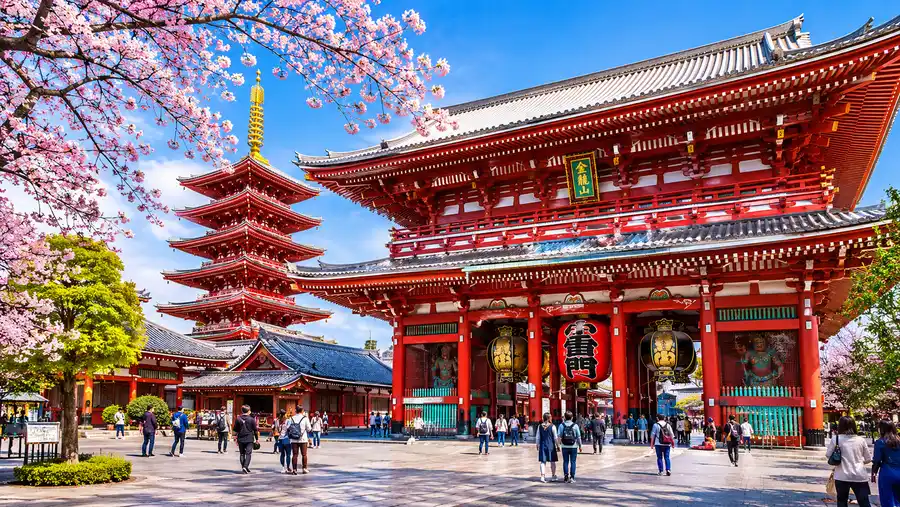
Approaching Sensoji means moving along a deliberate ceremonial axis. The transition starts at the outer threshold, known formally as the Furaijinmon but called the asakusa kaminarimon gate by almost everyone. The structure acts as a physical boundary between the mundane urban noise of modern Taito ward and sacred precinct soil. Flanking the entrance are two towering wooden deities: Fujin, the god of wind who clutches a bag of gales, and Raijin, the god of thunder who pounds drums to conjure lightning storms.
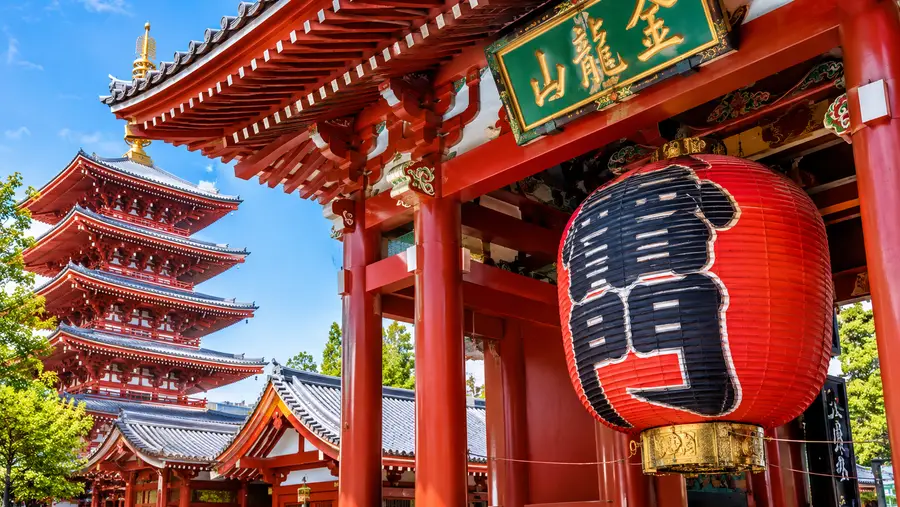
Between these guardian gods hangs the colossal red chochin lantern. It weighs around 700 kilograms, measures nearly four meters tall, and commands immediate respect. If you look straight up while passing beneath it, you will notice an intricate dragon carved into the dark cedar base. Edo craftsmen believed dragons brought rain, serving as magical protection against the devastating fires that routinely swept wooden neighborhoods.
Beyond the gate lies Nakamise-dori, a paved lane that has operated as a commercial avenue since the late 1600s. Walking past the snack stalls brings you to the second massive barrier, the Hozomon, or Treasure House Gate. This two-story structure houses sacred Buddhist scriptures and guards the inner courtyard. Suspended from the rear side of the gate are two gigantic straw sandals called o-waraji. Crafted by hundreds of volunteers from Yamagata Prefecture, each sandal weighs 400 kilograms. Local lore says they scare off wandering demons, who look at the footwear and assume a massive giant guards the temple inside.
Once through the Hozomon, you face the Main Hall, the Hondo. The current building appears ancient at first glance, but it is actually a meticulous post-war reconstruction completed in 1958. Its steep, sweeping hip-and-gable roof sits covered in lightweight titanium tiles designed to withstand severe tremors. Inside, the ceiling glows with vibrant paintings of flying heavenly maidens (Tennin) and an ink dragon painted by celebrated master Ryushi Kawabata.
The Five Story Pagoda Sensoji Temple Tokyo and Sacred Grounds
Standing tall to the left of the main hall is the striking five story pagoda sensoji temple tokyo travelers photograph from every angle. It pierces the sky at 53 meters, glowing in vermilion lacquer and gold trim. Originally constructed around 942 by the military commander Taira no Kinmasa, the tower has burned down and risen again at least five times across its history.
The modern pagoda was finished in 1973. It looks traditional on the outside, but it rests on a central pillar made of reinforced concrete, engineered with an internal dampening design that allows the five separate tiers to sway in opposite directions during an earthquake without toppling. The uppermost level contains an inner sanctum holding actual relics of the historical Buddha, gifted to Sensoji from Sri Lanka in 1966.
Just east of the Buddhist main hall, you will find an entirely different spiritual atmosphere at the asakusa shrine. Marked by simple stone torii gates, this Shinto shrine honors the two fishermen brothers and the village headman who founded Sensoji. Locals call it Sanja-sama, meaning the shrine of the three gods.
The relationship between Sensoji and Asakusa Shrine represents classical shinbutsu-shugo, the ancient blending of Shinto and Buddhism that defined Japan before the Meiji Restoration forced their separation in 1868. Amazingly, Asakusa Shrine survived the firebombing of 1945 completely untouched. Its dark wooden pillars and painted eaves date back to 1649, commissioned directly by the third Tokugawa shogun, Iemitsu.
| Structure | Original Build | Current Reconstruction | Architectural Highlight |
|---|---|---|---|
| Asakusa Kaminarimon Gate | 942 | 1960 | 700kg red lantern with base dragon carving |
| Hozomon Gate | 942 | 1964 | Dual 400kg straw waraji sandals on rear wall |
| Main Hall (Hondo) | 645 | 1958 | Reinforced concrete frame with titanium roof tiles |
| Five-Story Pagoda | 942 | 1973 | Houses Buddha relics from Sri Lanka in top room |
| Asakusa Shrine (Sanja-sama) | 1649 | Intact Original | Surviving Edo-era Gongen-zukuri wooden craftsmanship |
Book your sensoji temple tokyo experience:
Fascinating Sensoji Temple Tokyo Facts You Might Miss
Beyond the grand buildings, dozens of smaller details sit hidden in plain sight across the grounds. If you look closely at any detailed sensoji temple tokyo wiki or archival record, you realize this complex functioned as the recreational and spiritual nucleus of the entire working-class downtown district, the shitamachi.
- The Panasonic connection: The giant lantern at the asakusa kaminarimon gate was actually funded by Konosuke Matsushita, the founder of electronics giant Panasonic. In the late 1950s, Matsushita suffered from debilitating knee pain. He prayed at Sensoji for healing, found relief, and funded the entire rebuilding of the gate in 1960 as a gesture of gratitude. You can see his company name discreetly written on the bottom rim of the lantern frame.
- Unforgiving paper fortunes: Omikuji fortunes at Sensoji are notoriously harsh. Most Japanese temples and shrines rig their fortune boxes so bad luck (kyo) turns up rarely, maybe ten percent of the time. Sensoji strictly preserves the traditional Buddhist ratio from the Muromachi period: roughly 30 out of every 100 sticks mean bad luck. If you draw one, tie it to the designated metal wires so the fortune stays behind.
- The Jokoro smoke bath: The giant bronze incense burner standing before the main hall is known as the Jokoro. Believers buy small bundles of incense sticks, light them in the brazier, and vigorously fan the aromatic grey smoke over their heads, faces, or aching limbs. Legend says the smoke carries healing properties and brings mental clarity.
- Hidden gardens: Tucked behind the administrative quarters lies the Denboin Garden, a private 17th-century stroll garden designed by tea master Kobori Enshu. It remains closed to the public most of the year, preserving a serene pond filled with carp beneath old weeping cherry trees.
Note: Photography is strictly prohibited inside the inner worship space of the Main Hall. Step back onto the open observation porch before pulling out a camera or phone.
Surviving Fires and Wars Across Sensoji Temple Tokyo History
The story of Sensoji is fundamentally a story of repeated devastation followed by stubborn renewal. Throughout the feudal era, Edo was plagued by catastrophic fires known dark-humoredly as the flowers of Edo. The temple burned down more than twenty times between the 11th and 20th centuries, only to be rebuilt by devoted emperors, military warlords, and common merchants.
When Tokugawa Ieyasu established the shogunate in 1603, he designated Sensoji as the official guardian temple of his dynasty. He believed the holy site stood at the unlucky northeastern direction of Edo Castle, serving as a metaphysical shield against malicious spirits. With royal Tokugawa money flowing in, the complex expanded into an opulent sprawling compound.
Tragedy struck during World War II. On the night of March 10, 1945, hundreds of American B-29 bombers dropped incendiary clusters across eastern Tokyo. The resulting firestorm incinerated the Asakusa neighborhood within hours. Sensoji's magnificent Main Hall, which had stood secure since 1649 and was designated a National Treasure, vanished in a sheet of flame alongside the historic wooden pagoda.
Only the foundation stones and a solitary ginkgo tree survived the blaze. You can still see that blackened ginkgo tree today near the main hall; despite deep thermal burns across its trunk, it sprouted fresh green leaves the following spring. For survivors picking through the smoldering debris, that tree became an unforgettable emblem of perseverance.
The post-war community refused to leave their holy site in ruins. Donations poured in from across Japan, penny by penny, funded by everyday citizens rather than government decrees. Rebuilding the main hall with modern fireproof materials took years, eventually finishing in 1958. It stands as a physical monument to Tokyo's ability to pull itself out of the ash.
- 1079: First major recorded fire destroys the original temple structures.
- 1180: Renowned warrior Minamoto no Yoritomo visits to pray for military victory, expanding temple lands.
- 1649: Third Shogun Tokugawa Iemitsu builds the historic Main Hall and Asakusa Shrine.
- 1923: The Great Kanto Earthquake devastates Asakusa, but the inner temple grounds shelter thousands of fleeing residents.
- 1945: Allied firebombing raids destroy the historic Main Hall and Edo pagoda.
- 1958: Reconstruction of the modern Hondo finishes using reinforced concrete.
Frequently Asked Questions about sensoji temple tokyo history
Why is Sensoji Temple so famous?
Sensoji is celebrated as Tokyo's oldest and most sacred Buddhist temple, founded in 628. It serves as the historic center of old downtown shitamachi culture, welcoming over thirty million visitors annually for prayer, cultural festivals, and street markets.
Can you see the golden Kannon statue found in 628?
No. The statue is a hidden image, known as a hibutsu. It has been sealed inside an elaborate reliquary within the inner sanctuary for over a thousand years to preserve its sanctity, meaning neither the public nor temple priests can view it.
Why are Sensoji Temple and Asakusa Shrine next to each other?
They reflect the historical harmony between Buddhism and Shinto in Japan. While Sensoji is a Buddhist temple dedicated to Kannon, Asakusa Shrine was built on the same grounds to honor the three mortal men who fished the statue out of the river and founded the temple.
Quick Reference
- Founded in 628 AD
- Dedicated to Bodhisattva Kannon
- Located in Asakusa, Taito Ward
- Main Hall rebuilt in 1958
- Over 30 million annual visitors
Book your sensoji temple tokyo experience:
Before You Go
Sensoji is far more than an Instagram backdrop framed by a massive red lantern. It is a living survivor of samurai warfare, imperial transitions, earthquakes, and devastating firestorms. When you visit, take a quiet moment away from the Nakamise souvenir stalls. Stand by the incense burner, watch the cedar embers rise toward the temple eaves, and listen to the wooden prayer beads clicking in old hands. You are standing in the very spot where Tokyo began.
Read more about sensoji temple tokyo.